Stickers in Counter-Strike 2 let you make your skin personal and unique. They are also a potential investment asset. The rarest and most valuable stickers cost tens of thousands of dollars, and many of them grow in price every day. The CS.MONEY Blog tries to figure out how to spot stickers with investment potential, which stickers could take off in 2026, and invites you to check out the results. You will also learn how to evaluate stickers, where to buy them, and how to reduce risks.

Stickers for building an investment portfolio can be purchased on CS.MONEY. They are available in both the Trade and the Market modes. The selection is huge, and you can even find the rarest stickers. So choose what you want to invest in and stock up now.
Important note! This text is not a financial advice. We do not know how the market will develop, which prices will skyrocket, or what will actually happen in 2026. Choose stickers for investment at your own risk.
Why stickers remain an interesting investment in 2026
The main reason stickers stay a top asset is that they are consumable. Unlike a knife or skins for the AWP and M4, a sticker disappears from the inventory forever once it is applied to a weapon. That means the total supply in the world goes down over time. This creates natural scarcity.
In CS2, besides this natural reduction in supply, there are several new reasons for growing demand:
- Improved visuals, a new engine, better lighting, stronger graphics, and more detailed models.
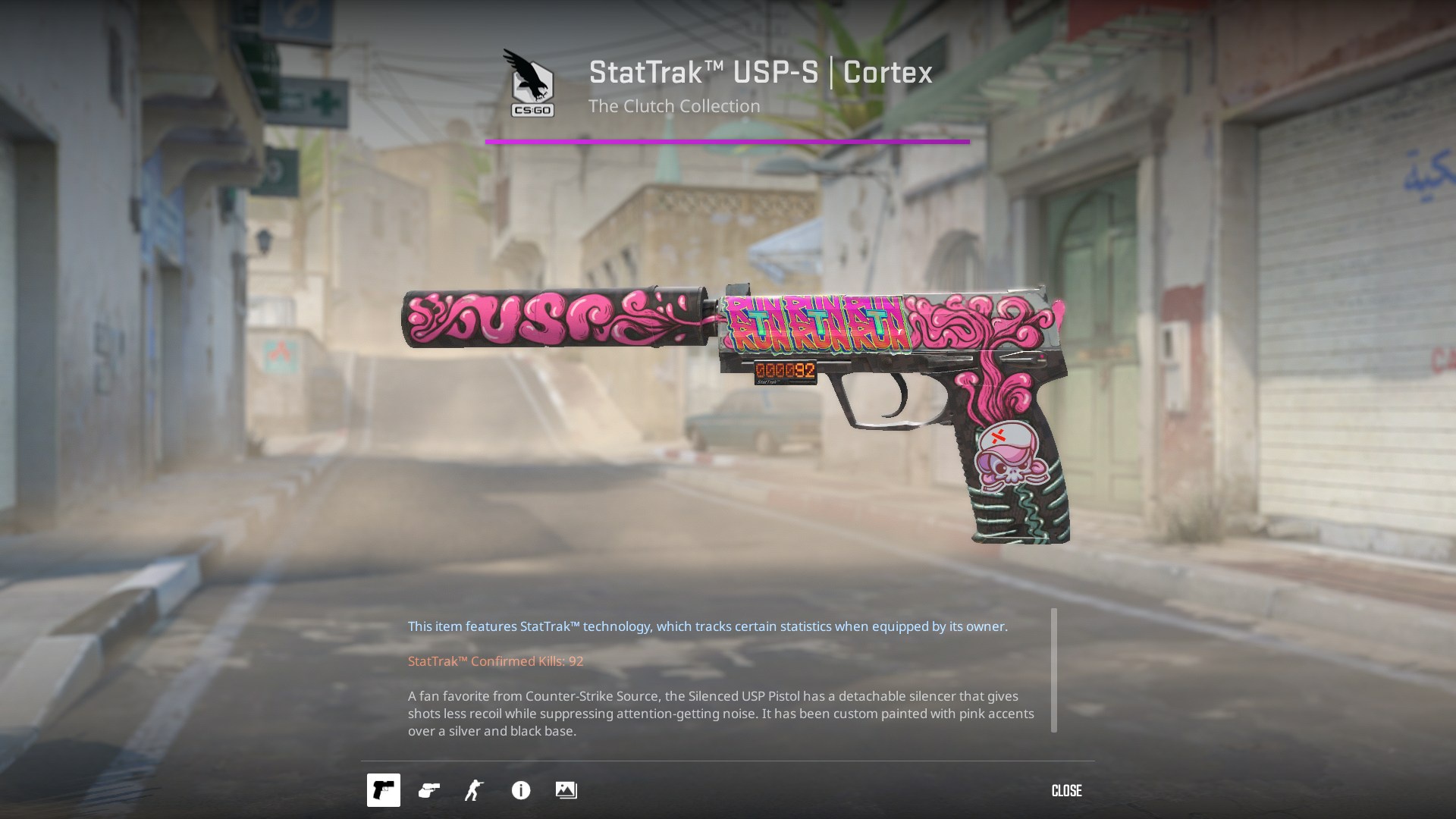
- Placing stickers wherever you want on the weapon. In CS2, you can use 5 stickers at once instead of 4 and mix them however you like. This made demand jump because players are burning through way more stickers for their crafts.
Another reason is holding the audience’s interest. CS2 is still the most popular game on Steam, hitting a peak of 1.5 million players online. So stickers are not just sitting around; players actually use them to show off their style.
What made prices go up in the past
Ever since stickers dropped in the game way back in 2014, their value has been all about looks and rarity. Cool-looking stickers showed off your style, and rare ones showed off your status. But as time went on, prices went up for a few specific reasons:
- Limited collections. Many stickers are available only for a short time, for example Major tournament stickers.
- Growth of the player base and deeper engagement. There is a clear link between interest in the game and interest in cosmetics. Experienced and dedicated players usually have much more expensive inventories than casual players. As player numbers grew, demand for customization grew too.
- Investment potential. Player-to-player trading created a full cosmetics market in CS. This opened investment opportunities. In simple words, stickers grew in price because many market participants believed they would grow and acted accordingly.
Last but definitely not least is status and collecting. Players love collecting things, just look at achievement hunting in popular games. A collection of rare stickers automatically raises the owner’s status in the community. A full inventory page of EMS Katowice 2014 holographic stickers is a huge flex.
Capsule and collection rotation: how does it work?
Earlier we mentioned limited-time availability. This is a full process controlled by Valve.
All sticker containers and collections can be divided into three groups. First, evergreen stickers. These stay in the game for years and their capsules can be freely bought in the CS2 in-game store. There are many of them, and their market price usually matches the in-game price.
Second, limited collections, for example from The Armory shop. These stickers are added and removed by the developers without advance notice. Their price often grows in the long term.
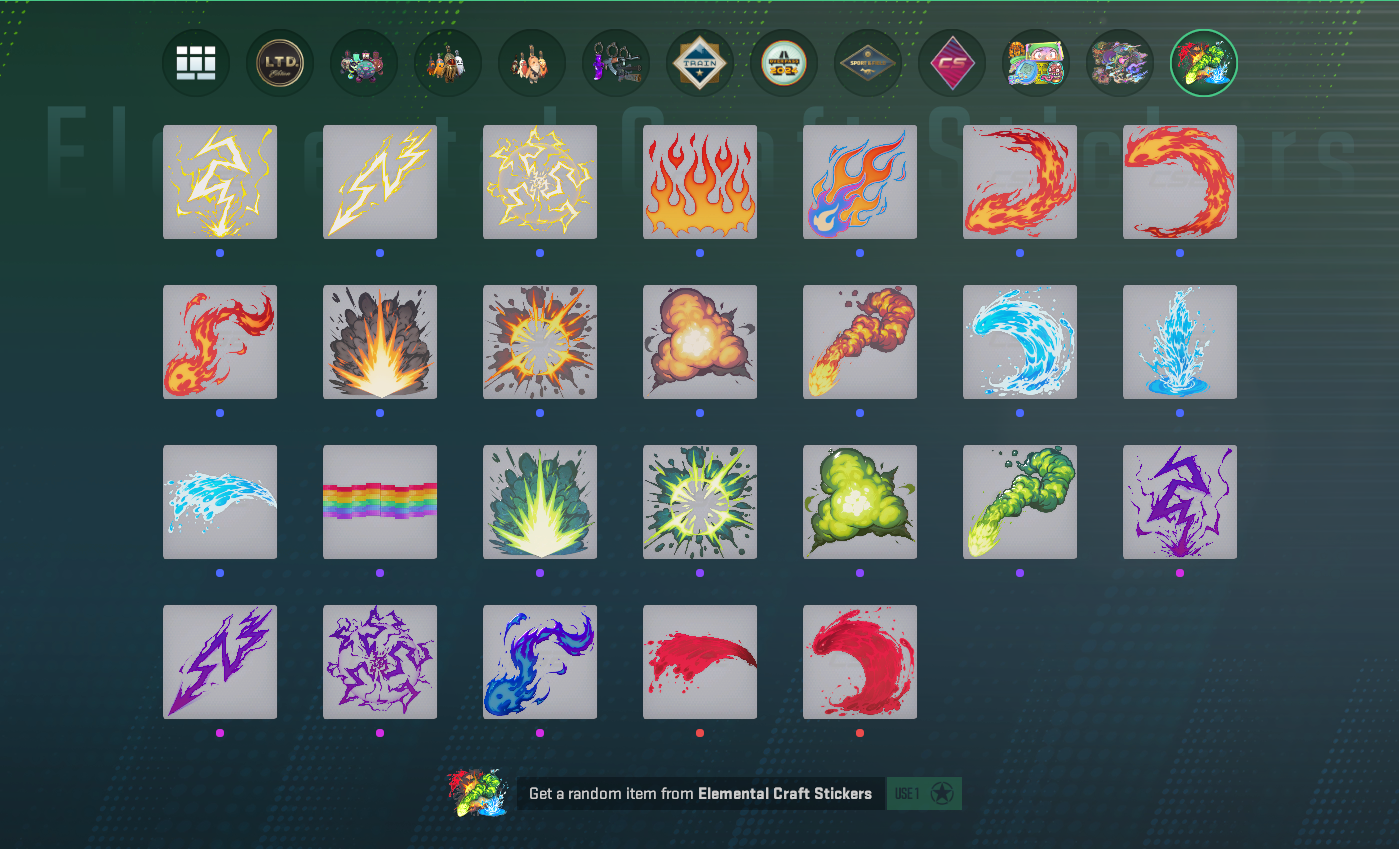
Third, tournament stickers. They follow their own life cycle:
- Right before the tournament starts, they are added to the game. Hype is high and prices are high.
- During the tournament, supply grows and prices fall.
- After the Major ends, Valve discounts the capsules. Millions of cheap stickers enter the market.
- Over time, listings decrease and prices begin to rise.
An important detail: it can take years for supply to shrink. Some paper tournament stickers from five years ago are still very cheap and have high supply with low demand.
How to evaluate a sticker’s investment potential (step by step)
CS2 has over 9,000 stickers right now, and each one could be an investment. But not all of them grow at the same speed. For example, the 2020 RMR FURIA has not gained even a cent in five years. The main problem is simple: it is impossible to predict market behavior and the next spike of a specific item.
What affects CS2 sticker prices
Still, there are several signs that can point to possible future growth and influence the 2026 sticker market:
- Limited supply. Many stickers were available only for a short time, which means their total market supply has a cap.
- Popularity in crafts. If a sticker is often used in crafts, it means players like it. This creates stable demand.
- Cultural impact. Owning certain stickers is a goal by itself.
Another key factor is patience. Some stickers may take a year or even several years to grow. This is normal. For example, Loving Eyes (Holo) needed six months to recover its starting price and another six months to show a clear upward trend.
Where to buy stickers?
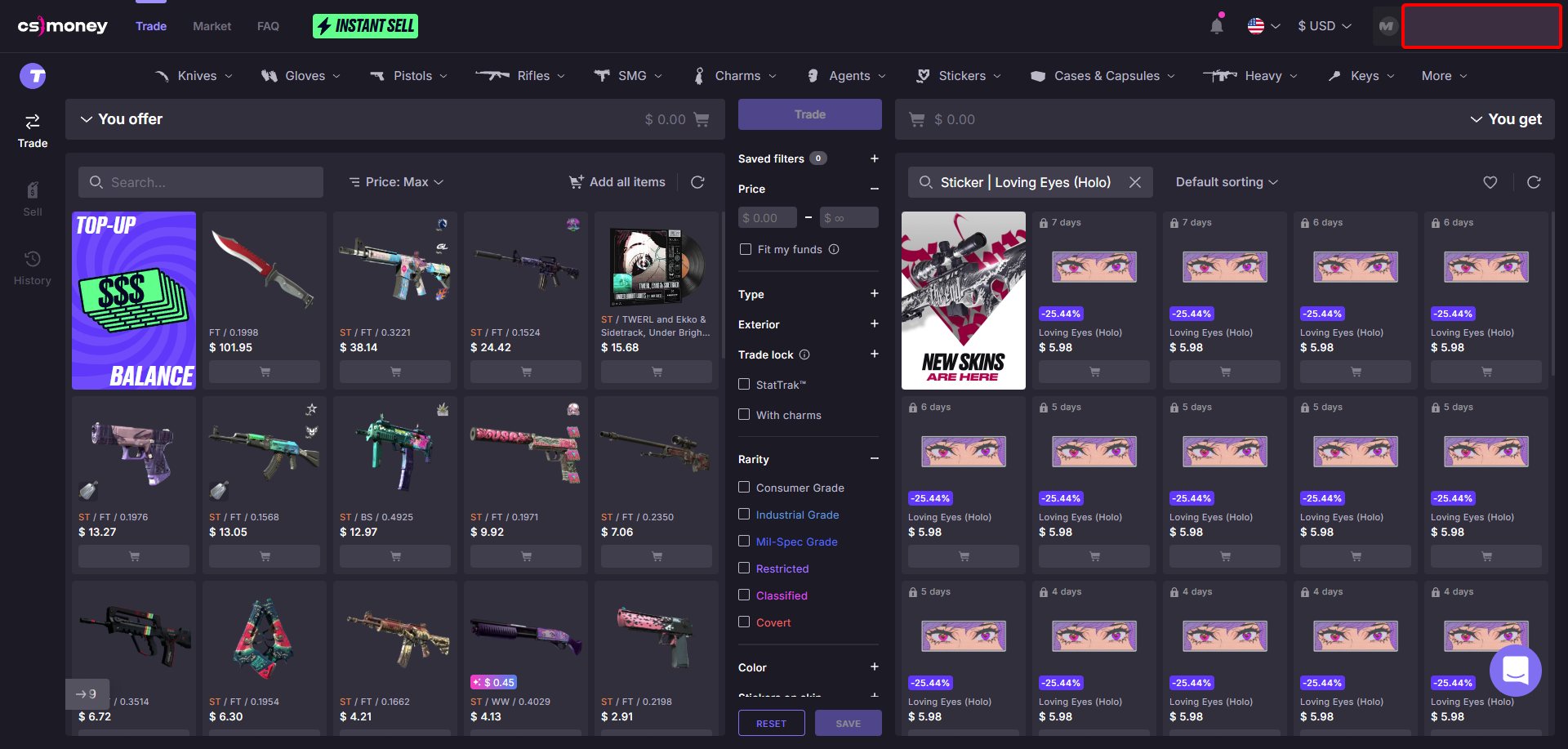
After choosing which stickers to invest in, you can buy them on CS.MONEY, where rare stickers are available in both Trade and Market modes. Remember a few important points. First, check the sticker type so you do not accidentally buy a paper version instead of a holographic one. Second, look at skins with stickers applied — sometimes valuable stickers are hidden there at a good price. Third, stickers cannot currently be removed from skins while keeping their separate value, so keep that in mind.
Best practices for sticker investing (risks and portfolio management)
Investing in stickers can’t be described as “buy and forget.” It is real capital management. The good news is that most classic trading principles also work here.
Diversification is key
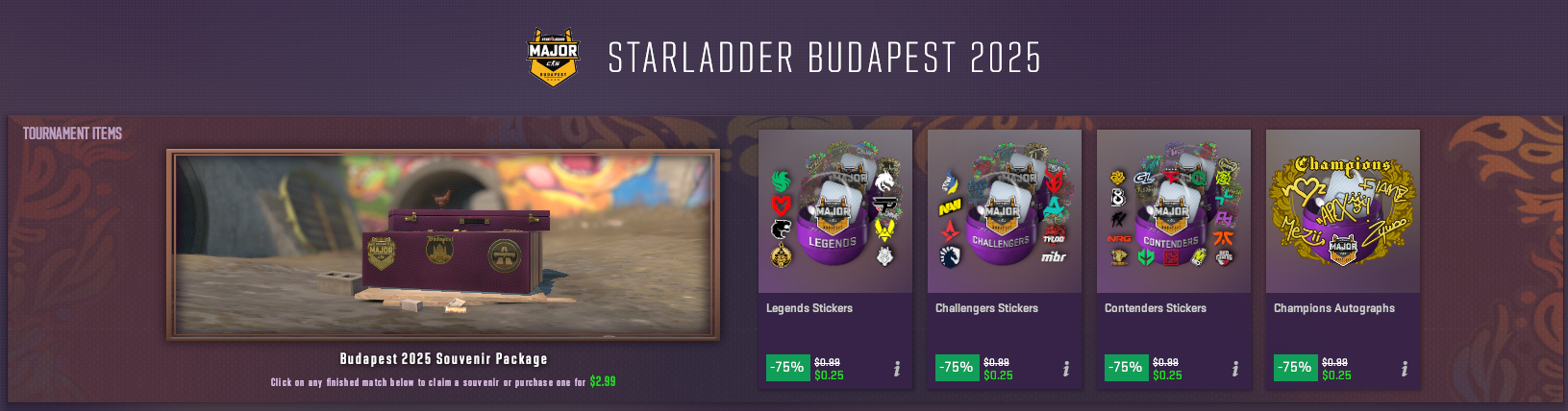
The biggest beginner mistake is picking favorites. Stickers differ in look, rarity, availability, and more. Filling your inventory with only one type, like metallic Dust FA (Foil), and hoping for price growth is risky.
Instead, diversify between different items: skins, stickers, agents, charms. Even inside your sticker portfolio, mix popular, high-demand options with a few riskier limited items.
We asked trader Alkem1st about trends for 2026. His advice — follow it at your own risk:
If you had to bet on one skin trend for 2026
Again, the diverse portfolio so you can catch Chinese pumps.
The market is active and often chaotic. Some stickers can skyrocket because of hype or a new popular craft and then quickly fall. Asset distribution is always a smart move.
Investment horizon
In traditional investing, there are three main horizons:
- Short-term, less than a year.
- Mid-term, from one to five years.
- Long-term, five or ten years and beyond.
The CS2 market is younger than traditional markets, but the idea is similar. Short-term investing means trying to profit from price swings. For example, buying at the end of the year and selling in late spring. Prices often drop during the Christmas period and then rebound. This does not work for every item, but traders who find such patterns can make successful deals.
Long-term investing also makes sense. Some items are limited by nature, like past operation skins and stickers or items from The Armory rotation. However, not every limited item will grow. Always analyze supply and demand before investing.
How to lock in profit and when to sell?
The basic rule is simple: buy low, sell high. The hard part is deciding when to press “Sell.” To avoid the “hold forever” trap, you can use partial sales:
- If the price grows by 50%, sell 25% of your stock.
- If it doubles, sell another 25%.
- After that, you have already covered your initial investment, and the rest can be managed freely.
This is a simplified strategy, but investing in stickers is never passive. You need to track the market, make forecasts, and take risks. It is also super important not to just trust your gut feeling, but to track your own actions and hunt down the absolute best moments to cash out and exit your position.
Which stickers to buy for investment in 2026?
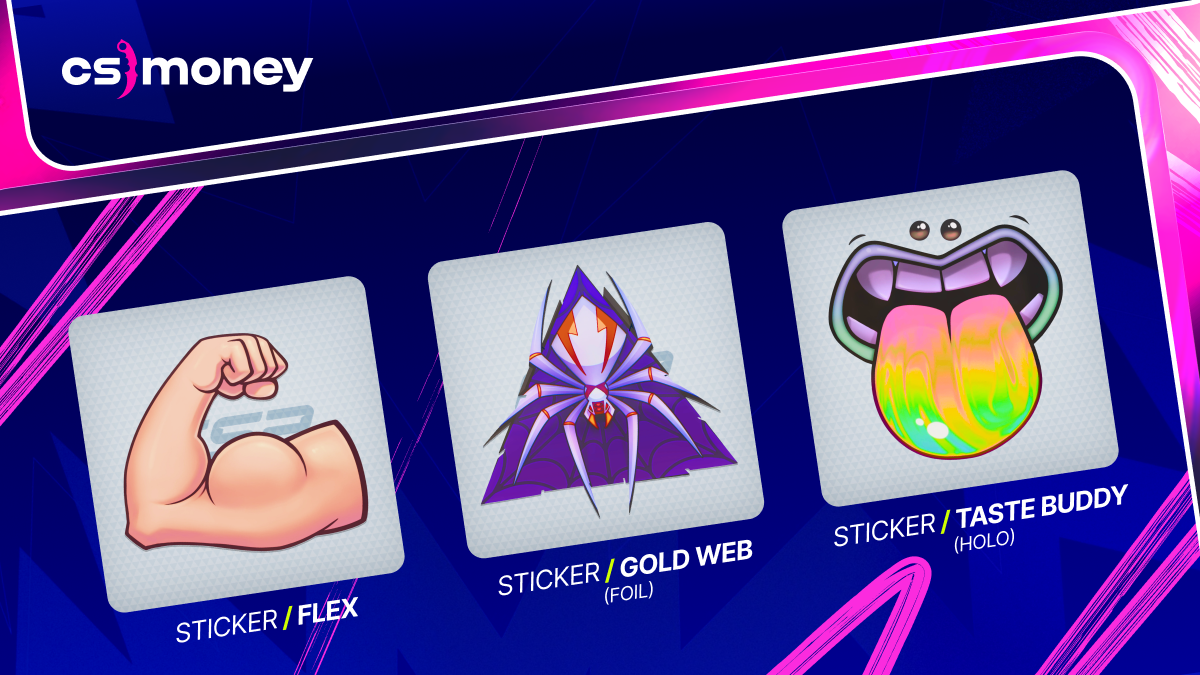
Below are five stickers that could theoretically grow in 2026. These are only examples based on the criteria above. Growth is not guaranteed, and you should always do your own research.
Flex
Flex is extremely popular in crafts. Despite large supply, it gets used up quickly by the community. Over the past year, its price almost doubled.
Gold Web (Foil)
Gold Web (Foil) has strong growth potential. It is rare, comes from an old operation, scratches well, and shines brightly under CS2 lighting. However, its price already increased four times in six months, and such growth may not last forever.
Taste Buddy (Holo)
Taste Buddy (Holo) is similar to Flex but has lower popularity and lower market supply. It is currently showing steady, slow growth.
Battle Scarred (Holo)
Another sticker from a past operation shop in CS:GO. Very bright, looks great on dark skins, and works well in self-combos. There have been no new supplies for years. Over the last year, its price doubled.
Fluxo Austin 2025
Patient investors may look at Major stickers from last year. Prices are currently low. Based on past team logo sticker trends, this could be a very long-term investment that may take 5+ years to show strong growth.
Common beginner mistakes when buying stickers
Entering trading and investing is not easy. The biggest risk is falling into common traps.
Buying into hype
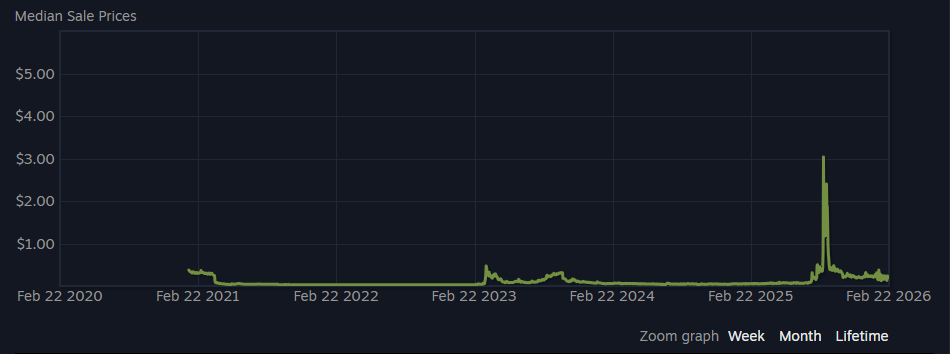
This is the most common and expensive mistake. If a sticker’s price is rising fast, beginners think they must buy before it gets even higher. But buying into a trend can mean missing the reversal point and taking losses instead of profits.
If everyone already knows about the growth, it may be too late. The best profits usually come from early analysis and diversification.
Ignoring fees and spread
Beginners often forget that buy price and sell price are different. On the Steam Market, every transaction has a 15% fee. To break even, you need more than 15% growth. Many third-party platforms, including CS.MONEY, have lower fees.
Spread is the difference between buy and sell prices. Rare stickers can have a 20–30% spread. For example, iBUYPOWER (Holo) Katowice 2014 might be listed for $95,000, but buyers are only willing to pay $70,000. That difference is the spread.
A beginner might see a $95,000 listing and then find one for $80,000 and think it is easy profit. In reality, if the highest buy offer is $70,000, selling would mean a $10,000 loss.
Ignoring reputation
Another serious mistake is trading on random websites. There are many scam sites promising “zero fees” or “free cases.” This often leads to losing not only items in a trade but the entire inventory through API scams:
- Logging into a suspicious website.
- Sharing your API key with dishonest owners.
- Receiving fake trade offers and losing your stickers for nothing.
There are also fake prices, dark design tricks, and other scam methods. The only way to avoid this is to use trusted platforms with strong community support and high Trustpilot ratings.
A quick checklist for evaluating a sticker
| Criteria | What to look for |
| Supply | Is the sticker still sold in the store? Was the capsule time-limited? |
| Liquidity | Check the number of sales. More sales mean higher liquidity. |
| Volatility | Price fluctuations. Higher volatility means higher potential profit — but also higher risk. |
| Demand | Is the sticker trending up or down? Are trades increasing? |
Putting money into CS2 stickers is a lot like buying stocks. You need to know what is going on, follow esports, and monitor the market. You can turn it into a real job or just take a gamble and leave the stickers sitting in your inventory for a couple of years.